
Dr Waiel Awwad
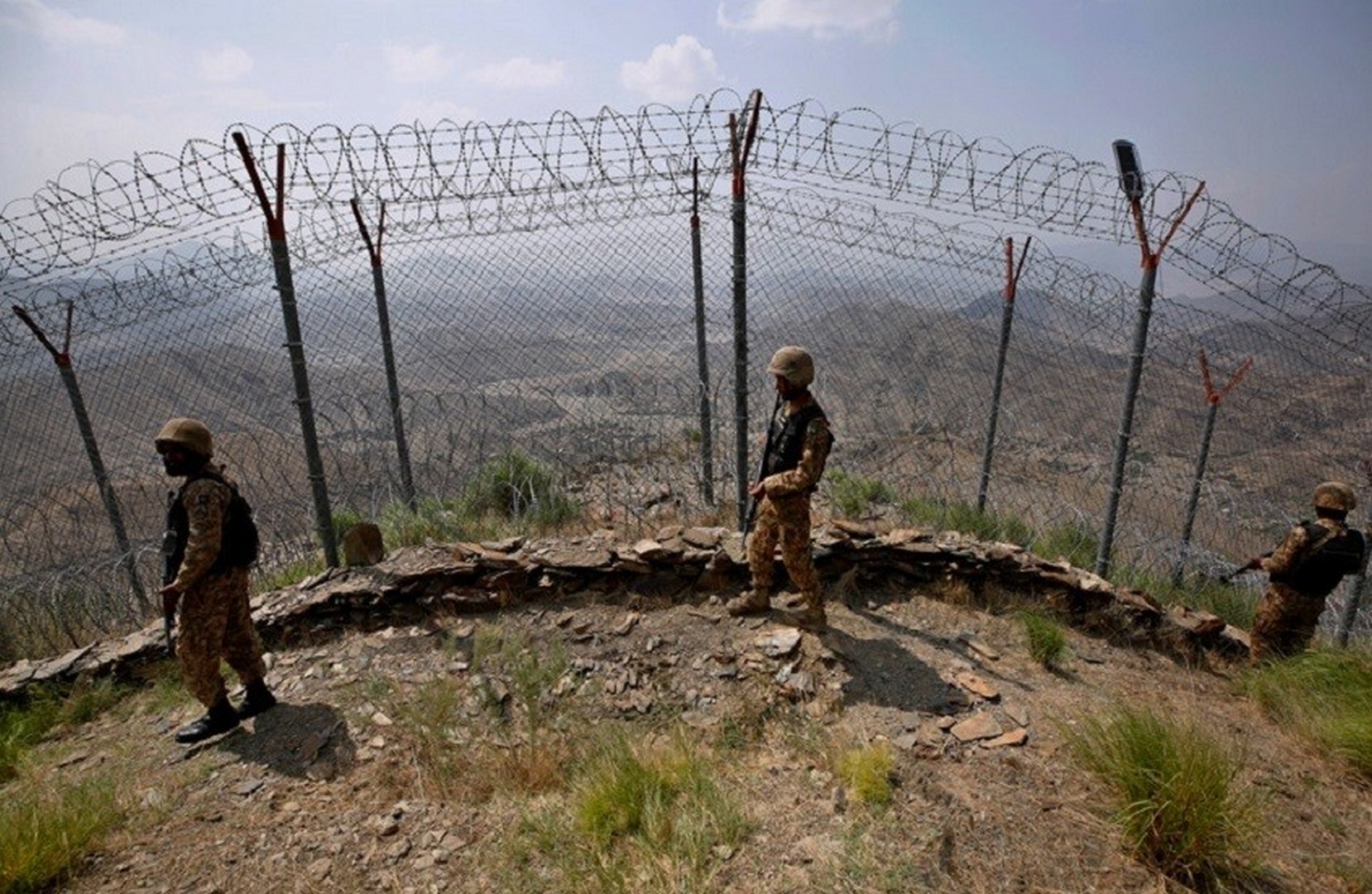
A sudden flare-up along the Pakistan-Afghanistan border, marked by cross-border firing, expulsions and diplomatic recriminations, is rarely an isolated incident. Rather, such episodes are symptomatic of deeper structural tensions that have accumulated since 2021, when the Taliban returned to power after the abrupt withdrawal of US forces and the abandonment of vast quantities of materiel. The current skirmish, therefore, speaks to historical grievances, domestic politics, regional competition, and competing strategic visions for South and Central Asia.
The Afg-Pak clashes have now reached a tipping point, especially after the killing of civilians — including members of a cricket team — in strikes attributed to Pakistan. Such incidents drastically raise the likelihood of renewed bloodshed and retaliation. Kabul’s government, facing intense domestic pressure and grieving popular sentiment, is unlikely to bow to Islamabad’s provocations or to accept further infringements on Afghan sovereignty. Unless both capitals pursue urgent de-escalation, the cycle of reprisal and violence risks spiralling into a more prolonged and destructive confrontation.
Kabul views the strikes as a blatant violation of its sovereignty and an attempt by Islamabad to exert pressure on the Taliban-led government. However, rather than succumbing to these provocations, Afghan authorities are expected to respond with firmness, driven by mounting internal anger and nationalist sentiment. The Afghan government has already signalled that it will not tolerate further aggression and may retaliate in kind, escalating tensions along one of the most volatile frontiers in South Asia. For Pakistan, the renewed hostilities come at a time of deep internal political instability and economic distress, further complicating its regional posture. The clashes also risk undermining Pakistan’s efforts to present itself as a key regional stabiliser and counterterrorism partner.
Historical and immediate drivers
Border management and sovereignty claims. The Durand Line remains a live wound: not internationally recognised by Afghanistan as an official boundary, it slices through tribal networks and pastoral economies. Incidents of cross-border pursuit of militants, civilian casualties, and punitive incursions routinely ignite larger confrontations.
Militancy and proxy dynamics. The post-2021 landscape saw a proliferation of armed groups, shifting loyalties, and command changes. Pakistan’s security services historically cultivated relationships with Afghan Islamist actors for strategic depth; the Taliban’s return altered but did not erase these ties. Militant factions (some opposed to the Taliban, others aligned) use porous border areas as sanctuaries, drawing Pakistani military responses that bleed into Afghan territory and trigger public outrage in Kabul.
Security paranoia and state fragility. Pakistan’s security establishment views instability in Afghanistan as an existential threat — both because it can produce waves of militancy inside Pakistan and because it affects Islamabad’s leverage in Washington and with regional partners. Conversely, the Taliban prioritises the survival of its regime and the attainment of external legitimacy, which often translates into uncompromising stances toward any alleged incursions or support for anti-regime elements, including those referred to as “anti-Khalq” or opposition groups. Such policies generate tit-for-tat dynamics, where accusations and retaliatory measures are exchanged, heightening tensions along the borders and with neighboring states.
In a broader context, this approach poses a significant challenge to regional stability, particularly given the overlapping interests of Pakistan, Iran, and India, as well as growing concerns over the resurgence of terrorist activities in South Asia. These uncompromising stances can also limit the Afghan government’s ability to engage constructively with its neighbours, complicating regional efforts to establish coordinated mechanisms for border management, security cooperation, and humanitarian response.
Great-power and regional competition
The Afghanistan-Pakistan tension cannot be viewed in isolation. Iran, sharing borders and security concerns with both countries, is wary of instability spilling over into its territory, especially amid tensions with the West. China, a key investor in Pakistan under the Belt and Road Initiative, is increasingly uneasy about the security risks to its regional projects. India, on the other hand, sees the rift as a potential opportunity to expand its outreach to Kabul and counter Pakistan’s influence. This was evidence after the visit of the Taliban foreign minister to India during the peak of the clashes between the Taliban and Pakistani forces.
Russia and the Central Asian republics, too, are watching closely, fearing a resurgence of militancy along their southern borders. The United States, despite its withdrawal from Afghanistan, retains strategic interests in containing extremism and monitoring the shifting balance of power in South Asia.
Great-power geostrategy. Afghanistan’s position as the gateway to Central Asia, the CIS energy and resource belt, has long attracted external patrons. Post-2021, China has deepened economic outreach (infrastructure, mining, investment) while Russia maintains security interests, and the U.S. retains intelligence and counterterrorism concerns. Each power’s footprint increases interstate competition for influence, often at Pakistan’s expense when Islamabad’s alignments or instability complicate broader strategies.
The China-U.S. rivalry and Pakistan’s calculus. Pakistan is a critical node in China’s Belt and Road ambitions (notably CPEC). Beijing’s need for secure overland corridors and stability incentivises Islamabad to manage its frontier; yet, heightened instability draws Washington’s attention back to the region, feeding a competition that can instrumentalise local conflicts.
Gulf and Iranian mediation. The involvement of Qatar, Saudi Arabia and, crucially, Iran to ease tensions is revealing. Gulf states seek regional stability for trade and investment; Iran fears spillover and the empowerment of hostile proxies; all three have political capital to mediate - but their engagement also underscores how localized disputes quickly become regional bargaining chips.
Domestic political drivers in both capitals
Longstanding ethnic tensions in Baluchistan, Sindh, and Khyber Pakhtunkhwa are deepening. The Baloch insurgency continues unabated, fueled by a sense of economic exclusion and military oppression. In Khyber Pakhtunkhwa, the return of militancy and cross-border incursions from Afghanistan has revived memories of the pre-2014 insurgencies. Even Sindh has shown signs of resistance against central domination, with Karachi’s economic heart suffering under federal mismanagement. Pakistan’s civil-military balance, economic fragility, and domestic security pressures shape an assertive external posture. Political actors may find domestic advantage in robust rhetoric or limited military action, while the military seeks to reassure its constituencies of control.
On the other hand, the Taliban’s resurgence in Afghanistan has dramatically shifted the regional balance. Taliban, struggling for recognition, aid, and control of restive areas, must show both capacity and resolve. Confrontations with Pakistan allow Kabul’s rulers to project strength domestically and to position themselves as defenders of Afghan sovereignty - even when those moves complicate relations with a key neighbor.
Policy considerations and recommendations
- Prioritize institutional border management. Invest in joint border commissions, hotlines, and confidence-building military protocols to reduce accidental escalation. Technical cooperation (mapping, shared surveillance against transnational criminals) can depoliticize routine incidents.
- De-link local grievances from great-power competition. Regional and international actors should avoid instrumentalizing the dispute for larger strategic competitions. Instead, they can offer mediation formats that emphasize humanitarian relief and rule-of-law outcomes.
- Address militant sanctuaries through coordinated intelligence, not unilateral force. Bilateral counterterror cooperation - with civilian oversight and legal frameworks for extradition and prosecution - will be more sustainable than cross-border kinetic responses.
- Support Afghan governance resilience. International engagement that promotes inclusive governance, economic opportunity, and cross-border commerce reduces the appeal of armed groups and stabilizes frontier communities.
Durable stability between Afghanistan and Pakistan requires far more than temporary ceasefires or symbolic gestures - it demands institutionalized conflict management, credible mediation, and a collective regional commitment to transform the frontier from a corridor of proxy rivalries into a shared space for security and commerce.
Unless both sides urgently engage in structured de-escalation mechanisms, possibly under regional or multilateral mediation, the conflict risks spiralling beyond control, threatening not only their fragile borderlands but also the wider region already burdened by security and humanitarian crises.
The growing fear of terrorism’s revival in South Asia adds a dangerous dimension to the crisis. The porous border, coupled with militant sanctuaries and ungoverned spaces, could once again become a breeding ground for extremist groups - undermining regional stability from Kabul to New Delhi. The re-emergence of such networks would not only endanger Afghanistan and Pakistan but could also ignite wider insecurities across Central and South Asia, drawing in regional powers and external actors.
The path to peace remains narrow and uncertain, yet the cost of continued confrontation will be far heavier - in human lives, economic stagnation, and the potential resurgence of transnational terrorism. If policymakers persist in viewing the border solely through the zero-sum lens of geopolitics, they will only fuel instability. The alternative - pragmatic cooperation, local empowerment, and regional coordination against extremism - though difficult, remains the only viable path to defusing one of South Asia’s most volatile flashpoints and preventing a new wave of terror in the region.


